Kursen omfattar cirka 200 heltidsstudietimmar, varav 14 timmar föreläsningar, 5 timmar laborationer, 12 timmar seminarier, utöver självstudier.
FCK3116 Molekylär struktur och dynamik med NMR-spektroskopi i lösning 7,5 hp
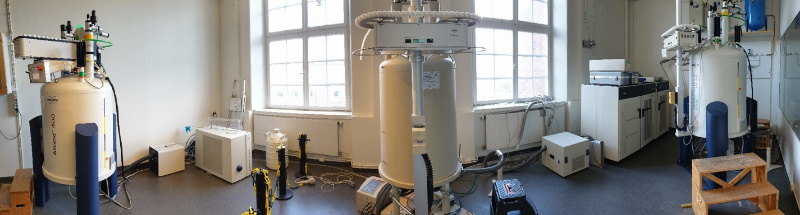
Kursen behandlar de grundläggande principerna för kärnmagnetisk resonansspektroskopi (NMR) och tolkning av spektra för att belysa molekylära strukturer och dynamik. Kursen innehåller föreläsningar, seminarier och laborationer. Seminarier kompletterar föreläsningarna med att lösa problem med gradvis ökande komplexitet.
Information per kursomgång
Information för VT 2026 Start 2026-04-01 programstuderande
- Studielokalisering
KTH Campus
- Varaktighet
- 2026-04-01 - 2026-06-01
- Perioder
VT 2026: P4 (7.5 hp)
- Studietakt
50%
- Anmälningskod
10919
- Undervisningsform
Normal Dagtid
- Undervisningsspråk
Engelska
- Kurs-PM
- Kurs-PM är inte publicerat
- Antal platser
Ingen platsbegränsning
- Målgrupp
- Ingen information tillagd
- Planerade schemamoduler
- [object Object]
- Schema
- Schema är inte publicerat
- Del av program
- Ingen information tillagd
Kontakt
Kursplan som PDF
Notera: all information från kursplanen visas i tillgängligt format på denna sida.
Kursplan FCK3116 (VT 2022–)Rubriker med innehåll från kursplan FCK3116 (VT 2022–) är markerade med en asterisk ( )
Innehåll och lärandemål
Kursupplägg
Kursinnehåll
- Fundamentala principer för NMR-spektroskopi
- Spektralparametrar (kemiskt skift, kopplingar)
- Relaxation, polarization transfer experiments,
- nuclear Overhauser effect (NOE)
- 2D NMR-spektroskopi
- Protokoll for rutinmässig strukturbestämning
- Dynamisk NMR-spektroskopi
Lärandemål
Efter avslutad kurs ska doktoranden ha kunskap och förmåga att:
- beskriva principerna för NMR-metoder med särskild hänsyn tagen till deras fördelar och begränsningar
- analysera NMR-spektra samt förklara och använda förhållanden mellan spektrala parametrar och molekylär struktur
- designa strategier för att analysera och lösa strukturproblem
- analysera och förklara effekter av dynamiska processer såsom kemiskt utbyte
Kurslitteratur och förberedelser
Särskild behörighet
Behörig till studier på forskarnivå.
Rekommenderade förkunskaper
Grundläggande kunskaper i organisk kemi.
Kurslitteratur
Du hittar information om kurslitteratur antingen i kursomgångens kurs-PM eller i kursomgångens kursrum i Canvas.
Examination och slutförande
Betygsskala
P, F
Examination
- TEN1 - Hemtentamen, 7,5 hp, betygsskala: P, F
Examinator beslutar, baserat på rekommendation från KTH:s handläggare av stöd till studenter med funktionsnedsättning, om eventuell anpassad examination för studenter med dokumenterad, varaktig funktionsnedsättning.
Examinator får medge annan examinationsform vid omexamination av enstaka studenter.
När kurs inte längre ges har student möjlighet att examineras under ytterligare två läsår.
Övriga krav för slutbetyg
För att bli godkänd på kursen måste studenten delta i minst 80 % av seminarierna och 80 % av föreläsningarna. Närvara vid laborationen och delta i den muntliga presentationen vid slutseminariet. Deltagande i laborationer och den muntliga presentationen vid slutseminariet är obligatoriskt.
Examinator
Etiskt förhållningssätt
- Vid grupparbete har alla i gruppen ansvar för gruppens arbete.
- Vid examination ska varje student ärligt redovisa hjälp som erhållits och källor som använts.
- Vid muntlig examination ska varje student kunna redogöra för hela uppgiften och hela lösningen.
Ytterligare information
Kursrum i Canvas
Registrerade studenter hittar information för genomförande av kursen i kursrummet i Canvas. En länk till kursrummet finns under fliken Studier i Personliga menyn vid kursstart.
Ges av
Utbildningsnivå
Forskarnivå